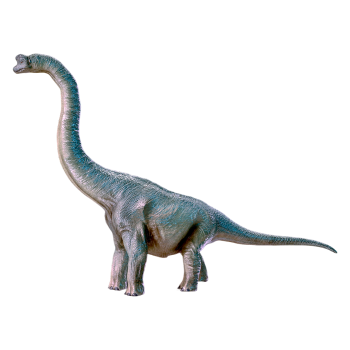
Brachiosaurus (3D animated model)

Brachiosaurus (3D animated model)
Brachiosaurus is a general term for the "Brachiosaurus" dinosaurs of the Jurassic period. The body length is 25 meters, the height is 15 meters, the weight is 30 tons, the tail is thick and short, the head is very small, the neck is very long, and the shape is similar to that of a giraffe. There are large claws on the inner side of the foreruns. The jaw is well developed, covered with 52 teeth up and down, and the edges of the teeth are sharp. The limbs are thick and strong. The nostrils are on top of the head. It is named for its long forelimbs.
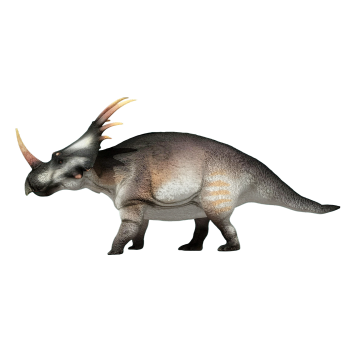
Halosaurus (3D animated model)

Halosaurus (3D animated model)
Stardosaurus (Styracosaurus), also known as shield-horned dinosaur, means "lizard with spikes (στυ ραξ)" in Greek. It is a genus of herbivorous horatosaurus dinosaurs and lived in the Cretaceous Campanidae, about 76.5 million to 75 million years ago.
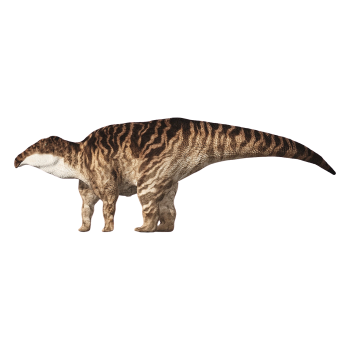
Shandong Dragon (3D animation model)

Shandong Dragon (3D animation model)
Shandong dragon (scientific name: Shantungosaurus) is a large herbivorous dinosaur of the genus Shandong dragon, which is about 15 meters long and weighs up to 15 tons. It is one of the largest known bird-buttock dinosaurs. The head is flat without crown, the beak is flat and duckbill-shaped, and the jaw has about 1500 molars, distributed in 60-63 tooth grooves. The tail is thick and flat, accounting for about half of the body length, and is used to balance body weight. There is a loose vertical overlying structure at the nostrils, presumably with vocal function.
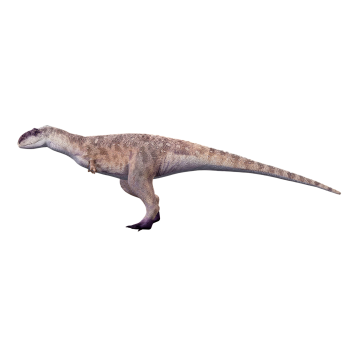
Winning King Dragon (3D Animated Model)
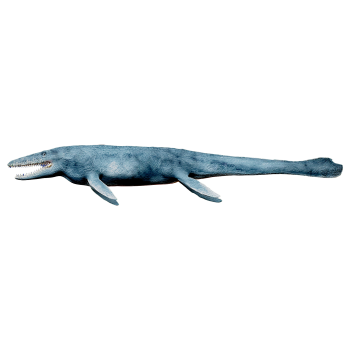
Winning King Dragon (3D Animated Model)

Shengwanglong (scientific name: Rajasaurus) is a large carnivorous dinosaur in the subfamily Abelilosaurus Komajun, with the type of Nabada Shengwanglong. Its body is about 6.5 meters long, and its head has a unique rounded corner composed of nasal and frontal bones. The fossils are found in the strata of the Lamita Formation in Kodar County, Gujarat, India and the Narmada River Valley near Jabalpur, Madhya Pradesh. The geological age belongs to the end of the Maastricht Stage of the Cretaceous. The species lived in the Indian peninsula in the late Cretaceous period and mainly fed on herbivorous dinosaurs (such as giant-footed dinosaurs), occasionally with similar predation behavior.
Ducklone (3D animated model)

Ducklone (3D animated model)

Dacron (scientific name: Dakosaurus) is a genus of the family Gelidae, which lived from the late Jurassic to the early Cretaceous. Its body length can reach 4-5 meters, with serrated teeth, a streamlined body and a vertical tail with fins, and its limbs are paddle-shaped, which is suitable for swimming in the marine environment. As a top predator, dacron preys on large prey by virtue of its strong bite and serrated teeth.
Ichthyosaur (3D animated model)

Ichthyosaur (3D animated model)
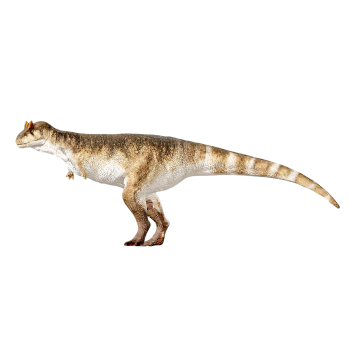
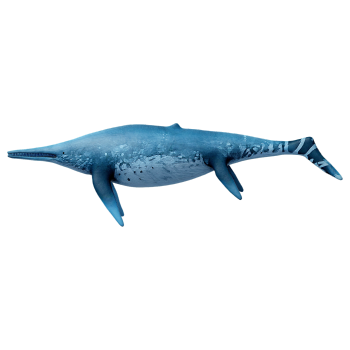
Ichthyosaurus (Latin scientific name: Ichthyosauria, from Greek ιχθυς, "fish", and σαυρος "lizard") is a large marine-dwelling reptile resembling fish and dolphin s. They lived during most of the Mesozoic era, first appearing about 0.25 billion years ago, slightly before the dinosaurs (0.23 billion years ago), and they disappeared about 90 million years ago, about 25 million years before the dinosaurs became extinct. Some ichthyosaurs are very small, but others are very large.
Carnivorous Beef Dragon (3D animated model)
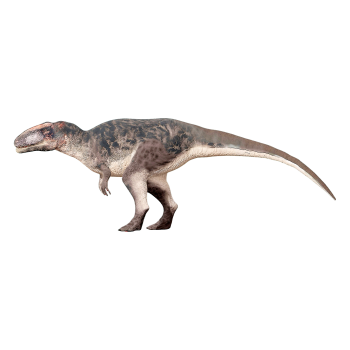
Carnivorous Beef Dragon (3D animated model)

Beef-eating dinosaur, a carnivorous dinosaur of the order saurohip theropod. The head of the beef cow is short and thick, with wing-shaped sharp corners above the eyes, small and forward-facing eyes, winged vertebrae, short forelimbs, and rows of protruding scales on both sides of the back. The length is about the length of the connection of two cars. The forelimbs are short, the hind limbs are long and strong, the long spine has wing-like protrusions, and the long and strong tail helps it maintain its balance. Because of the two horns on the head, it looks like a "bull horn", so it was named a meat cattle dragon.
Sharktooth Dragon (3D animated model)
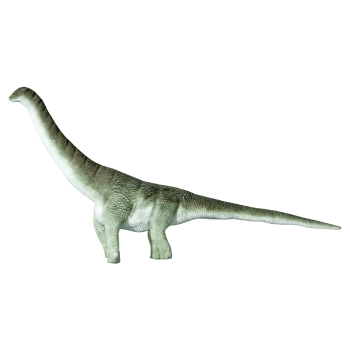
Sharktooth Dragon (3D animated model)

The genus Shagosaurus currently contains two species, the Saharan Shagosaurus and the Igidi Shagosaurus. Sharkodontosaurus lived in North Africa during the Senoman period of the Late Cretaceous. Sharkodontosaurus is closely related to Quibuchatosaurus, Mapulosaurus and southern behemoths, which belong to the same class of allosaurus. Sharkodontosaurus was very large, similar to Tyrannosaurus rex, and possibly even larger. The shark-toothed dragon lived in an era when giant beasts were rampant. The contemporaries also included the 15-meter-long Spinosaurus, the 9-meter-long ruffled dragon, and the sauropod tidal dragon more than 30 meters long. There were also 12 meters of emperor crocodiles lurking in the water. Sharkodontosaurus likely fed on contemporaries of giant sauropods.
Argentine Dragon (3D animated model)

Argentine Dragon (3D animated model)
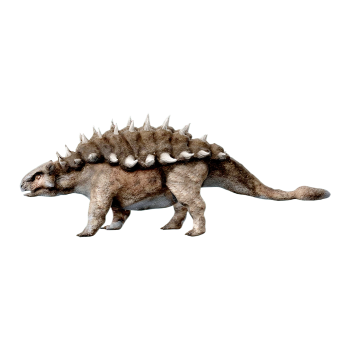
Argentinosaurus belongs to the sauropod dinosaur titanosaur class, the name is very simple, meaning a dinosaur found in Argentina. Age: 0.1 billion years ago Middle Cretaceous Albutian -93 million years ago Late Cretaceous Sennoman. is one of the largest land dinosaurs ever discovered.
An angylosaur (3D model with action)

An angylosaur (3D model with action)
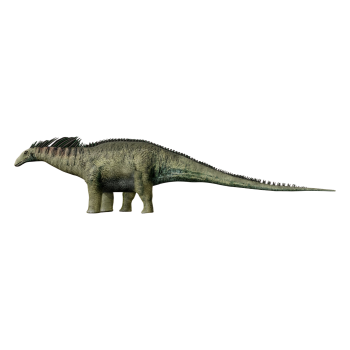
The scientific name is Ankylosaurus, is a late Cretaceous herbivorous dinosaur, belongs to the family of armosauridae. It lived about 66 million years ago in what is today North America. Known for its unique physical features, the body is covered with bony nails and spikes that gave it good protection against the fierce carnivorous dinosaurs of the time. The body is huge, the body length can reach about 10 meters, the weight can reach several tons. It feeds on plants and has strong limbs and a short tail. The head is relatively small, but has powerful jaws and is able to chew hard plants.
Amagaron (3D animated model)

Amagaron (3D animated model)

Amaranosaurus (Amargasaurus cazaui) is a very strange sauropod dinosaur. It is a genus under the fork dragon family. It lives in South America in the Lower Cretaceous. It is a small sauropod dinosaur, about 10 meters long. It is a four-legged vegetarian dinosaur with a long and flat skull and a long neck. It is similar to its relative Forsakosaurus. However, it has two long spines behind its neck, which are higher than other sauropods. It is completely wrapped by flesh to form a pair of neck sails. Some people speculate that its purpose is to confuse carnivorous dinosaurs and make them think that Amaranus is is is very large and is not suitable for killing.
Mother Dragon (3D animated model)

Mother Dragon (3D animated model)
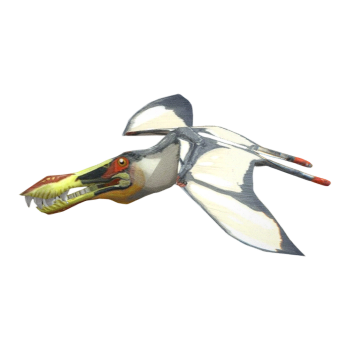
The English name of Mother Dragon (maiasaura) means "good mother lizard". In 1979 in Montana, USA, scientists discovered some dinosaur nests with the skeletons of small dinosaurs. So they named this dinosaur the mother dragon. Because of the habit of group life and the habit of group nesting, dinosaur experts were able to find many adult and infant fossils of the mother dragon and its eggs from its nests, thus making people understand the living habits of the mother dragon and the process of nurturing children. The forelegs were shorter than the hind legs. They have a long tail.
Liaoning Pterosaur (3D animation model)
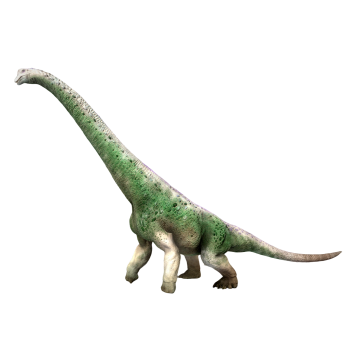
Liaoning Pterosaur (3D animation model)

Liaoning pterosaur (scientific name: Liaoningopterus) is a genus of reptiles in the family Pterosauridae, with the type species Gu's Liaoning pterosaur (L. gui). The fossil was found in the Early Cretaceous Jiufotang Formation in Chaoyang City, Liaoning Province, China. The skull is about 61cm long and has a wingspan of more than 5 meters. The premaxillary bone and tooth bone have the characteristics of curved ridge. The teeth of the upper and lower jaw are concentrated in the front, and the dentition accounts for about 1/2 of the length of the jaw. The fourth tooth is the largest tooth in the known pterosaur, and there is obvious tooth replacement phenomenon. The morphological characteristics show that fish may be the main food source.
Long Neck Dragon (3D Animated Model)

Long Neck Dragon (3D Animated Model)
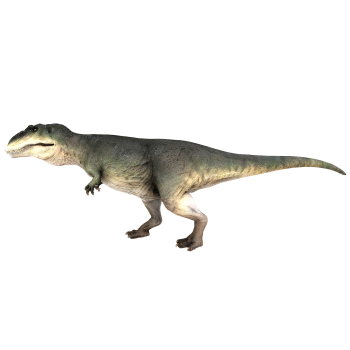
The long-necked dragon is a herbivorous lizard-rump dinosaur of the genus Brachiosaurus, which belongs to the chordates lizard class. Its typical body length is 25 meters, the forelimb is longer than the hind limb, the skull has a large hole to reduce weight, the brain capacity is about 300 cubic centimeters, and the tail has a large ridge to assist in balance. The species lived in East Africa in the late Jurassic period, with a daily eclipse of 1.5 tons of plants, larval clusters resisting natural enemies, and adult individuals living alone. The long-necked giant dragon was originally classified as Brachiosaurus. In 1988, Ge Paul listed it as a subgenus of brachiosaurus. In 2009, a study confirmed that it had differences in the proportion of dorsal vertebrae with high-chest brachiosaurus and established an independent genus.
Southern Behemoth Dragon (3D animated model)
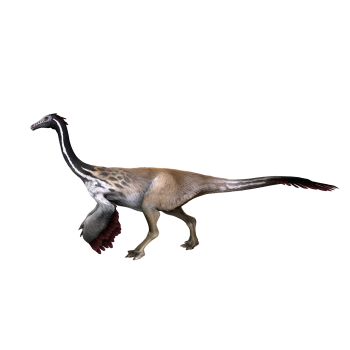
Southern Behemoth Dragon (3D animated model)

There is only one species of southern behemoth dragon, which is the southern behemoth dragon, a large theropod dinosaur found in Argentina. It lived in the late Cretaceous Senoman period, about 97 million years ago. The southern giant dragon belongs to the class of sharkodontosaurids in the family allosauridae, and is probably the largest land predator in the history of the earth. Compared with Tyrannosaurus rex, the sample size of the southern behemoth is very small, and the integrity of the large individual specimens is very poor, so it is quite difficult to accurately estimate its body size. Who is bigger than Tyrannosaurus Rex is also a topic of debate in academia.
Like a Chicken Dragon (3D animated model)
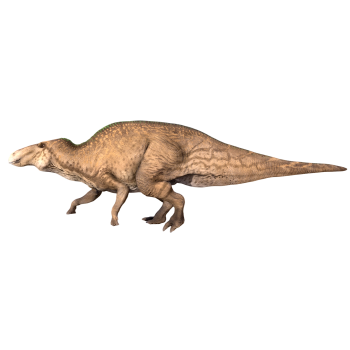
Like a Chicken Dragon (3D animated model)

The name "chicken-like dragon" means "similar to poultry". Paleontologists believe that chicken-like dragon may be the largest bird-like dragon, which looks very much like a bird. Of course, it's not a bird and can't fly, it's just a running chicken-like dragon that lived in the semi-desert arid region of the late Cretaceous period about 70 million years ago. Its shape is very much like today's large ostrich, but without feathers and wings, its eyes are born on both sides of the head, high above the position, wide field of vision. In the dinosaur family, like a chicken dragon can be regarded as a running master. The reason why it runs fast is due to its body structure. Like a chicken dragon, it is tall and can step far.
Edmonton Dragon (3D animated model)

Edmonton Dragon (3D animated model)
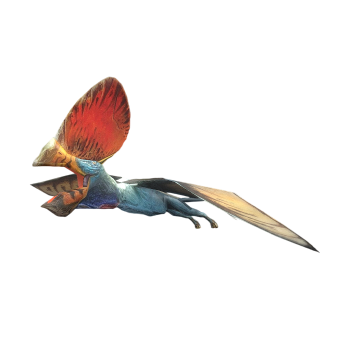
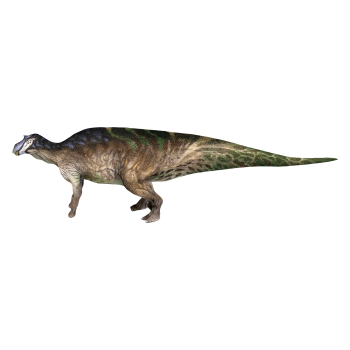
Edmontonosaurus is also translated as Edmontonosaurus and Edmontolosaurus, which are named after Edmonton in Alberta, Canada, where the fossil was found. Edmontonosaurus was a dinosaur of enormous size. They have a triangular side of the head, no crown, wide anterior and posterior segments of the head, narrow middle segment, and a snout similar to the duck's beak.
Thor Pterosaur (3D animated model)

Thor Pterosaur (3D animated model)
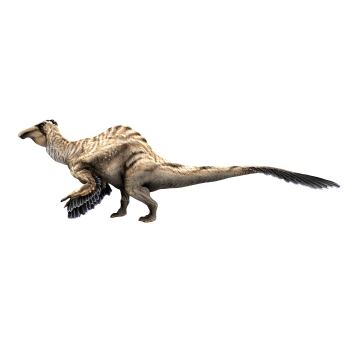
Raytheon Pterosaurus (scientific name: Tupandactylus) is a genus of Pterosaurus Pterosauridae. Fossils were found in the Santana Formation (Santana Formation) in Brazil, dating from the early Cretaceous. Thor pterosaurus had a large, specially shaped crown composed of bone and soft tissue, with short monofilament-like feathers and fluffy branched feathers found at the base of the crown. It is large in size and has an estimated wingspan of up to 5 meters. In 2007, the Emperor Pterosaurus was created as a new genus, the Emperor Thor Pterosaurus; the genus is named after Tupan, the Thor of the Tupi tribe.
Deinonychus (3D animation model)

Deinonychus (3D animation model)
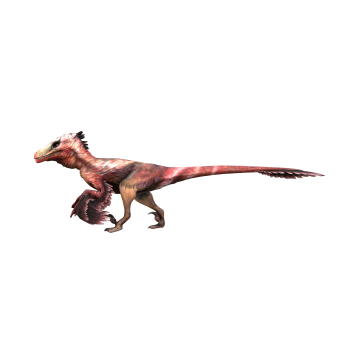
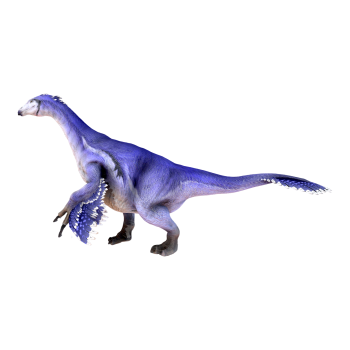
Deinocheirus (scientific name: Deinocheirus) is a genus of giant, omnivorous theropod dinosaur belonging to the family Deinocheiridae. It ranks among the largest members of the Ornithomimosauria, with adult individuals reaching lengths of up to 12 meters and weighing approximately 9.3 tons. It is one of the largest theropods ever discovered in Asia and one of the largest theropod dinosaurs known. This species exhibits distinctive morphological features: its forelimbs reach a length of 3 meters, with hooked claws measuring 20–30 centimeters at the tips; its dorsum is elevated into a hump-like structure; and it possesses a relatively small, duck‑billed head, with a keratinous beak on the mandible.
Raptor (3D animation model)

Raptor (3D animation model)
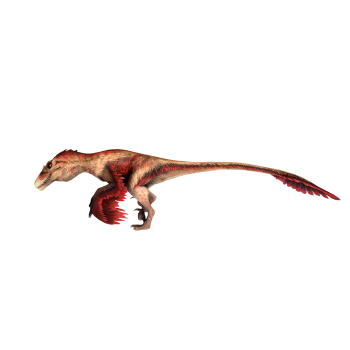
Dakotaraptor (scientific name: Dakotaraptor) is a large theropod dinosaur belonging to the genus Dakotaraptor within the family Dromaeosauridae, classified as a member of the subfamily Dromaeosaurinae. It lived during the Maastrichtian age of the Late Cretaceous, approximately 67 to 65 million years ago. It measured approximately 5 meters in length, weighed about 450 kilograms, and had a femur measuring 60 centimeters in length, making it one of the largest dromaeosaurids known. Dakotaraptor possessed elongated tibial structures and ulnar quill knobs, suggesting that its forelimbs may have been covered with flight feathers. The type species is Dakota raptor sternbergi, discovered in the Hell Creek Formation of South Dakota, USA.
Dakotaraptor (3D animated model)

Dakotaraptor (3D animated model)
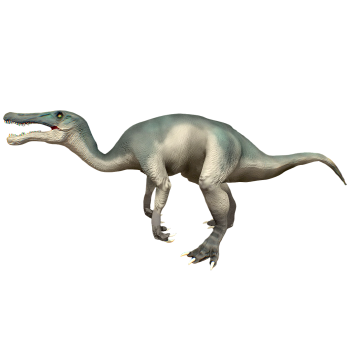
Dakotaraptor (scientific name: Dakotaraptor) is a large theropod dinosaur belonging to the genus Dakotaraptor within the family Dromaeosauridae, classified as a member of the subfamily Dromaeosaurinae. It lived during the Maastrichtian age of the Late Cretaceous, approximately 67 to 65 million years ago. It measured approximately 5 meters in length, weighed about 450 kilograms, and had a femur measuring 60 centimeters in length, making it one of the largest dromaeosaurids known. Dakotaraptor possessed elongated tibial structures and ulnar quill knobs, suggesting that its forelimbs may have been covered with flight feathers. The type species is Dakota raptor sternbergi, discovered in the Hell Creek Formation of South Dakota, USA.
Heavy Claw Dragon (3D Animated Model)
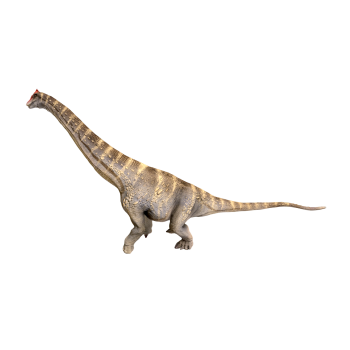
Heavy Claw Dragon (3D Animated Model)

The heavy claw is a spinosaurus found in Britain, about 7.5-10 meters long and weighing about 1.2-1.7 tons. There is only one species of heavy-clawed dragon, the Walker's heavy-clawed dragon. Heavy-clawed dragons are not as large as spinosaurs, but they are the most well-known spinosaurs. The quality of fossils preserved by the heavy claw is higher than that of almost all other spinosaurus dinosaurs. At the same time, the discovery of the heavy claw dinosaur made people realize for the first time that there was a special member of the theropod dinosaur: it had a long and narrow crocodile-like skull, conical teeth and huge thumb claws, which mainly fed on fish.
Aramoron (3D animated model)

Aramoron (3D animated model)

Alamoron (Alamosaurus), also translated as Alamoron, is a genus of Alamoron under Saltaronaceae, living in North America during the Upper Cretaceous. It is a large four-legged herbivorous dinosaur, and the Titanosaurus family to which it belongs is also the last family of herbivorous dinosaurs in the world. It is more than 30 meters long and weighs up to 75 tons. Aramorosaurus is similar to other sauropodon dinosaurs, with a long neck and tail, and a whipcord structure at the end. Alamosaurus, like many large sauropod plant-eating dinosaurs, was a big man with a long neck and tail.
Sickle Dragon (3D animated model)

Sickle Dragon (3D animated model)

Fusarium is a large theropod dinosaur found in Mongolia. At present, there is only one species under this genus, namely, the type turtle-shaped Fusarium. The claws on the hands of Fusarium were so huge that they were even longer than the arms of adults that early researchers even mistook their giant claws for the ribs of giant turtles. It is one of the most mysterious theropod dinosaurs. So far, no complete skeleton has been found, and no soft tissue marks have been found. Paleontologists speculate on the shape characteristics and living habits of Scyariosaurus mainly from the study of other members of the Scyariosaurus.
1 2 3 4 5 6 Next